Mechatronics & Control Theory: Designing Fully Automatic India's First Roti Maker
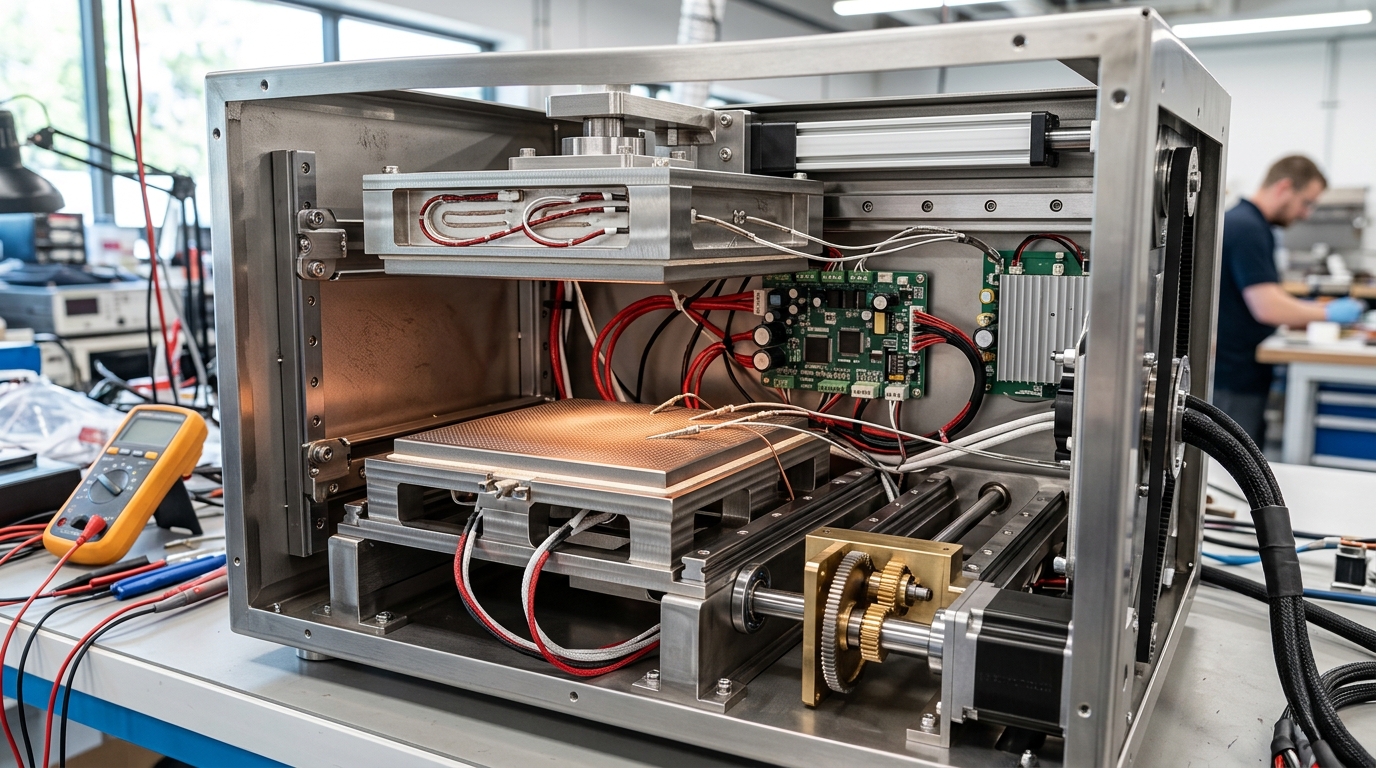
Table of Contents
“Building a countertop appliance that takes dry flour and water and outputs a perfectly puffed, freshly-cooked roti in 90 seconds is a massive mechatronics engineering challenge. It requires sub-millimeter precision mechanical motion synchronized with high-power closed-loop thermal regulation.”
1. Symmetrical Dual-Loop Thermal Control
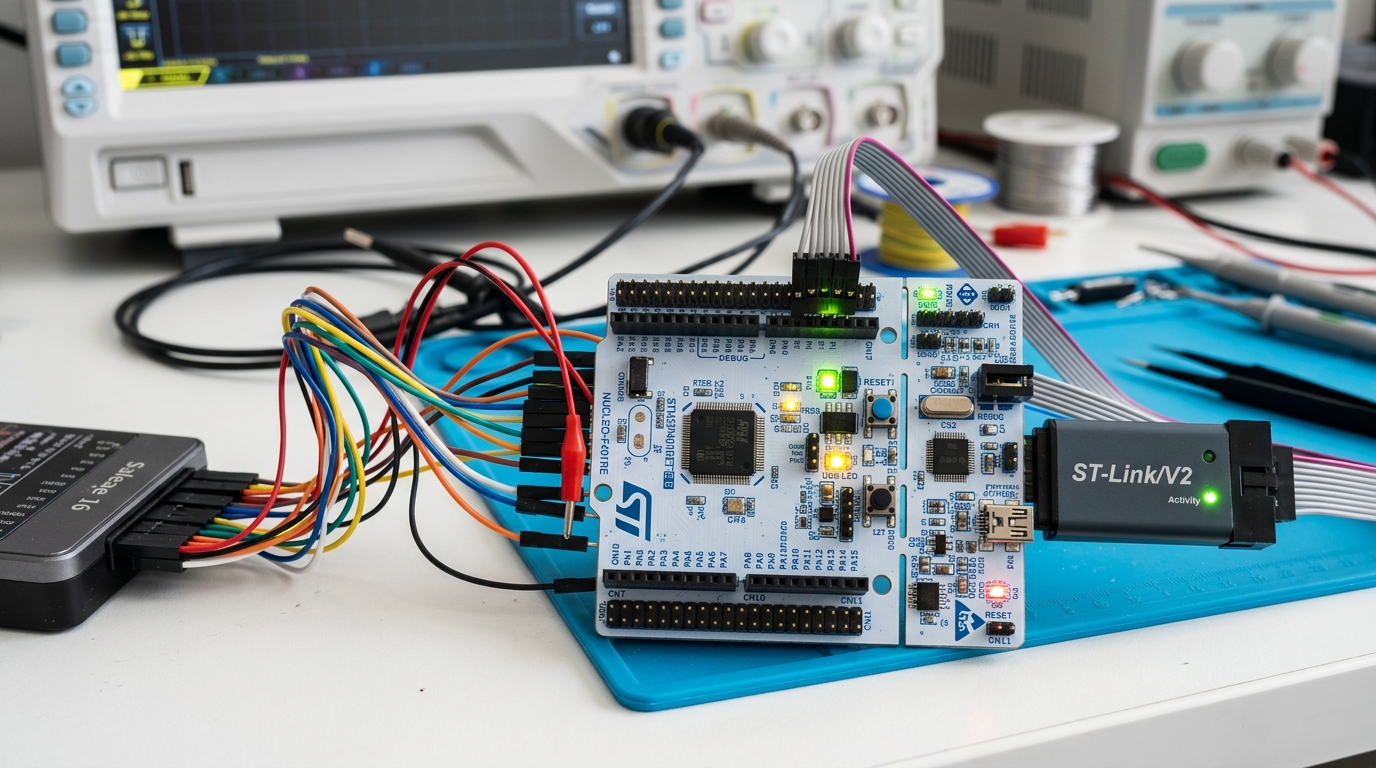
To bake a roti so it puffs perfectly, the top and bottom heating platens must maintain precise, independent temperature profiles. The top plate requires high heat (240°C) to sear the upper crust, while the bottom plate runs at 210°C to allow steam expansion. We utilize a dual-channel PID loop running on a 32-bit ARM Cortex-M4 microcontroller.
Key Engineering Takeaways
- Top Platen Heating: 240°C target to sear upper crust
- Bottom Platen Heating: 210°C target to enable steam pocketing
- Resolution: Sub-1°C precision thermistor feedback
2. High-Torque Stepper Motor Synchronization
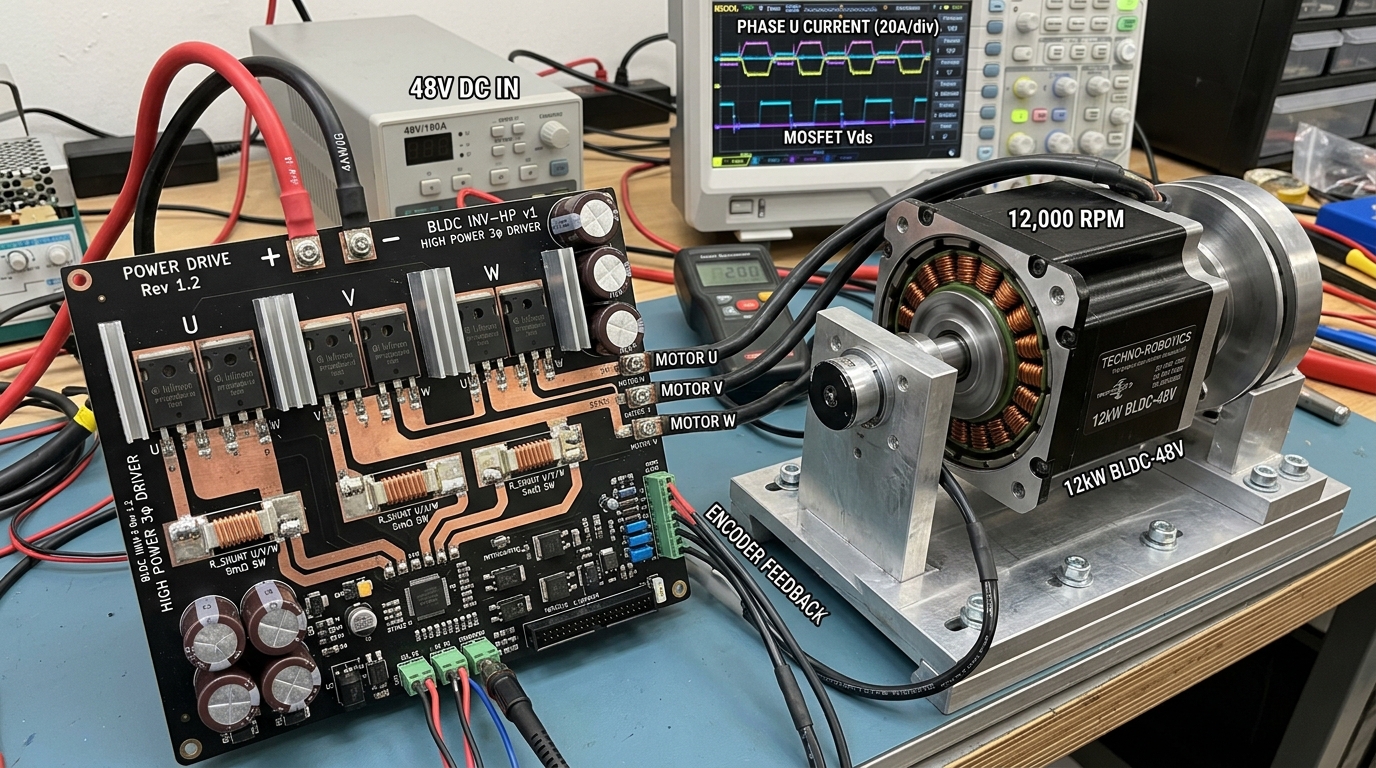
The spiral dough kneader requires high-torque at very low speeds. We use brushless DC planetary geared motors coupled with optical encoders for absolute position feedback. The pressing mechanism uses an ACME lead screw driven by a NEMA 23 stepper motor to exert up to 1500 N of pressing force.
// High-Torque Kneader Control Profile
Motor: Geared Brushless BLDC
Torque: 4.5 Nm at 60 RPM
Feedback: 1024 CPR Quadrature Optical Encoder
Control Loop: Field Oriented Control (FOC) at 20 kHz
Summary & Engineering Verdict
Proper sensor fusion, high-force mechanical mechanical design, and closed-loop speed control turn raw kitchen ingredients into fresh puffed flatbread with absolute automation.
Frequently Asked Questions
Why does a roti puff up during cooking?
Roti puffs up due to the rapid expansion of trapped water moisture converting to steam. Searing both sides quickly traps the steam within the center of the dough layer, creating a pocket that inflates.
Embedded Systems & Mechatronics Design
CircuitBEES specializes in advanced actuator motor drives, PID thermal systems, and high-performance kitchen countertop control designs.

CircuitBEES Engineering Team
Verified Engineering TeamThe CircuitBEES engineering group brings together senior PCB layout artists, mechatronics designers, and embedded systems developers. By publishing our hands-on findings from high-speed memory tuning to deep mechatronic systems—such as our landmark countertop appliance, India's first fully automatic roti maker—we aim to raise the standard for hardware documentation.
Share this guide with your team
Help other hardware and embedded engineers optimize their designs.